Please Note: We require advisors to complete a registration form to confirm we have all the correct information for each high school team.
To ensure adequate space, we are capping the number of teams at 16. Please register at your earliest convenience to secure your spot. If you are registering more than one team, please complete one form per team and indicate each different team name under “Name of High School.”
Example: Amazing Engineers at Best High School
Please click here to officially register your team for this year’s contest.
2025 Contest: Engineering a Bloom Free Park Site
One of the environmental problems that developed over the last twenty-five years in the Mississippi River watershed is the increase of algal blooms. Two of the places in the St. Louis region that fell afoul of this contagion are the reflection ponds on both ends of the park surrounding the Gateway Arch. Although there is no clear knowledge of whether these ponds contain the cyanobacteria that produce dangerous cyanotoxins, the blooms are unsightly. They may have long-term health effects if not mitigated.
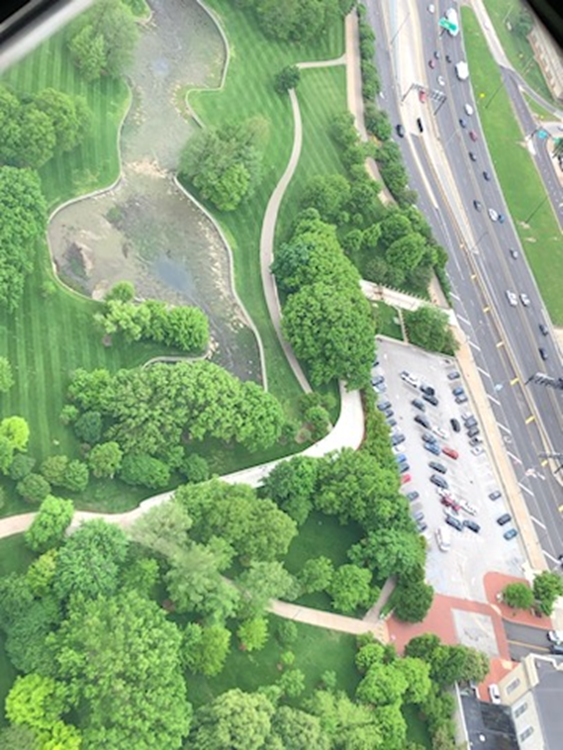
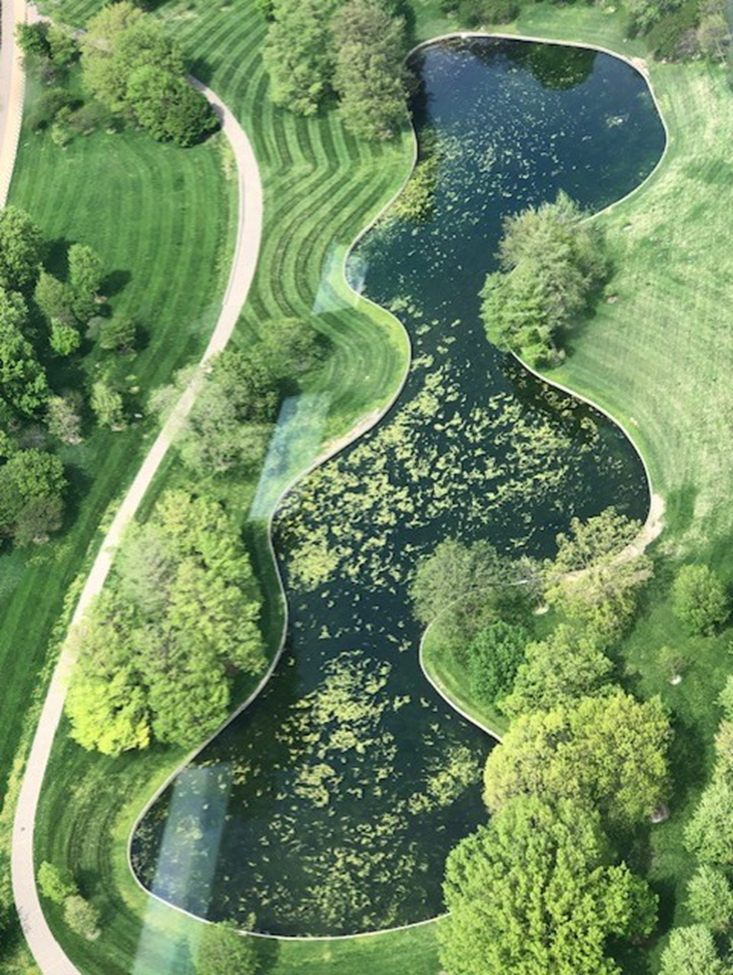
The 2025 Gateway Arch Engineering contest is dedicated to bioengineering and a two-fold problem on the grounds of Gateway Arch National Park: how to lower, or eliminate, the blooms in the Arch reflection ponds and what to do with the potentially dangerous biowaste after it has been removed from the ponds. While there are bioswales, the Arch needs a more permanent solution as well as a way to use the left-over algae. We ask the contestant not only to find a way to drain the algae but also to turn it into a biofuel continuing the National Park Service’s commitment to environmental stewardship.
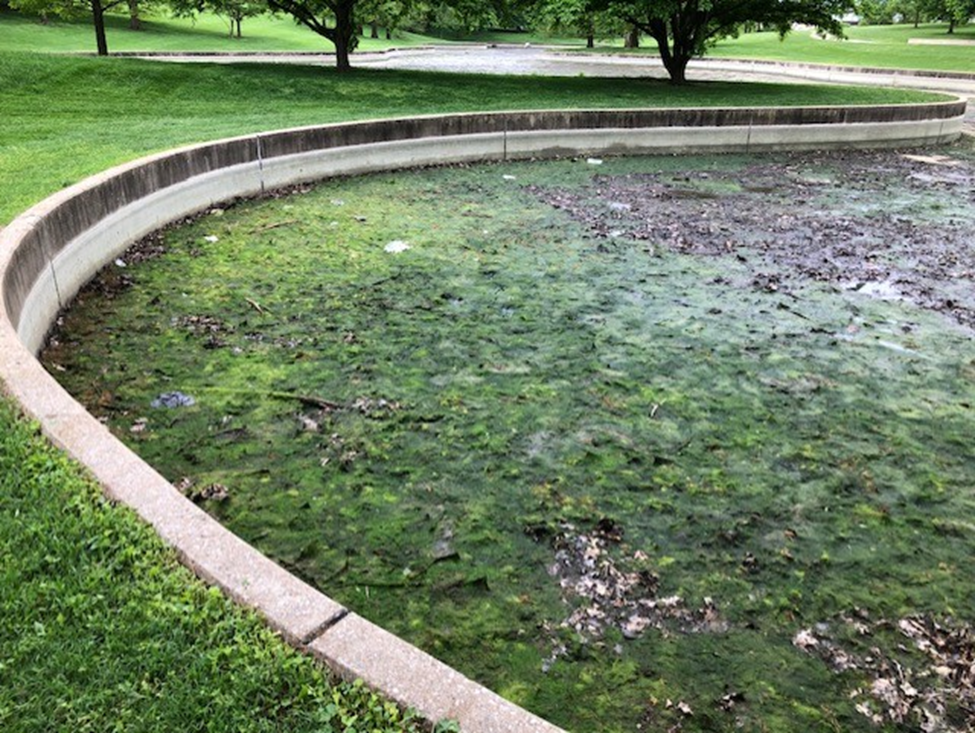
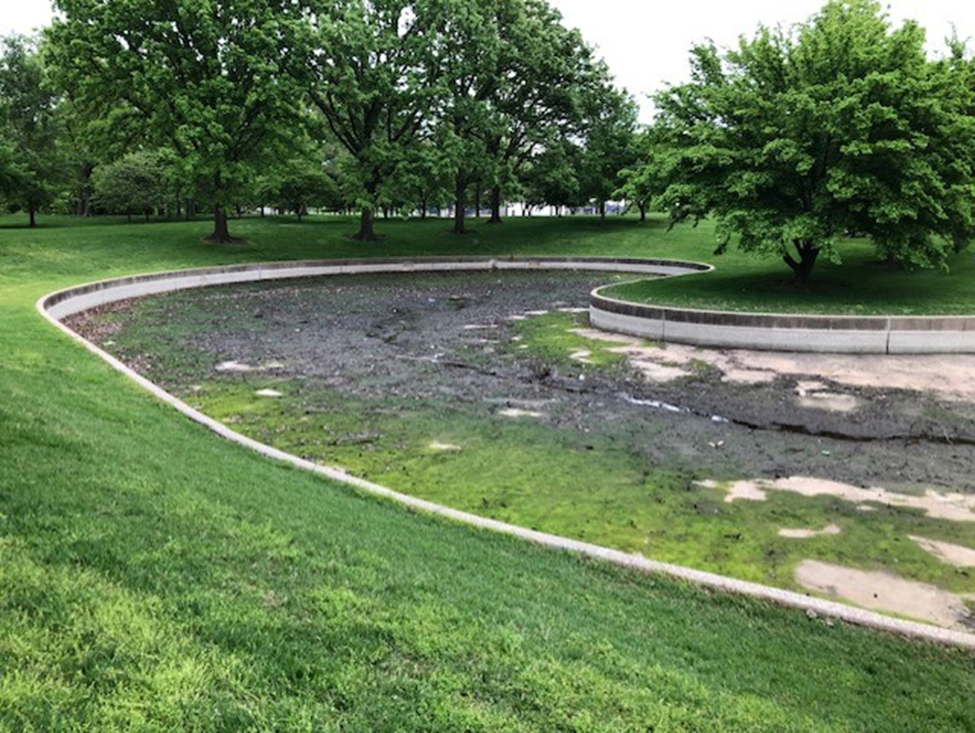
Previous two photos, above, are of the emptied south pond with collected algae on the bottom. Credit: Anthony Gilpin
The contest officially begins in September. It promises to be very difficult, full of real-world engineering challenges, and a valuable learning experience. It will also be great fun. The codes, regulations, measurements, and parameters will be available in September when the contest begins. The schools will make a visit to see the area and will submit an Executive Summary and a PowerPoint Presentation. The Final will be at the McKelvey School of Engineering at Washington University on November 15th, 2025.
Overview
The project needs to have two functions this year since the issues related to the algae are recurring and are potentially harmful to the avian population of the park that wanders in, or near, the ponds. The teams will need to decide multiple ways of dealing with this year’s problem and are required to have solutions to the results of the mitigations that they choose. The team needs to determine if they are willing to solve the problem by using a single one-time mitigation, or if their solution is to deal with the accumulation of the algae on a regular basis.
Once the algae have been removed from the ponds, either permanently or on a regular basis, there needs to be a solution to what to do with the algae that has been removed from the ponds. The high amount of nitrogen in algae should not be allowed to be placed into the waste stream or the Mississippi River. The contest is asking whether the algae is removed completely or collected on a regular basis, the resulting collected algae needs to have utility. Of particular interest is the use of the algae as an energy source to run the vehicles and machinery that is used throughout GANP, and it is strongly encouraged that each team figure a solution for turning the algae into biofuel. Sustainable operations within the National Park Service follow our commitment to environmental laws and regulations as outlined in the National Environmental Policy Act (NEPA) and the National Historic Preservation Act (NEPA). The ponds also contribute to the Gateway Arch’s status as a National Historic Landmark (NHL), so any structural or visual changes to the ponds will need to be compatible with the historic design to maintain the listing as an NHL. NPS strives towards sustainability and energy independence which supports the mission to preserve the parks unimpaired, for this and future generations. All proposals must consider the National Historic Landmark listing of the park and avoid adverse effects on the historic property.
Design Information and Specifications
- Plans and specifications for a solution to the types of algae (string algae, duck weed, and watermeal) in the Gateway Arch reflection ponds
- Plans for using the blooms as a biofuel
- EPA requirements
- Detail how the project complies with the National Environmental Policy Act (NEPA) and the National Historic Preservation Act (NEPA). For assistance contact the park’s compliance coordinator Amanda Burke at amanda_burkewilliams@nps.gov
The Gateway Arch National Park Engineering Contest is supported by the following partners:

 Gateway Arch National Park Engineering Contest