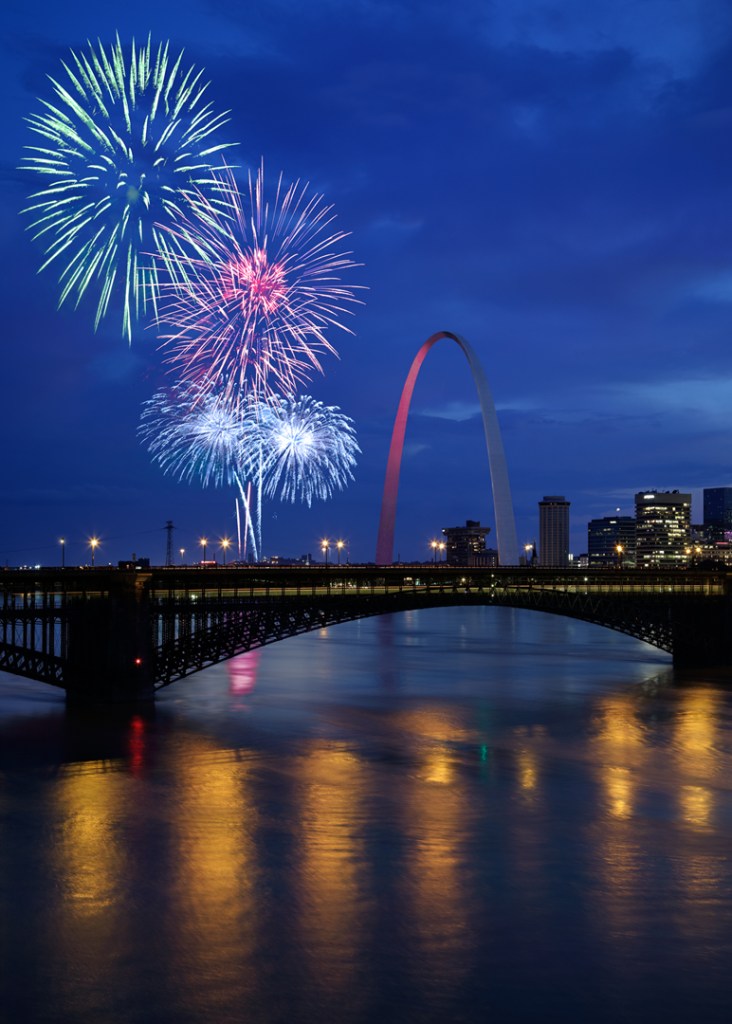
Magnificent…Majestic…Incredible…These are just a few of the adjectives commonly used to describe the Gateway Arch in St. Louis. Reflecting both the rising and setting sun, the Arch represents the westward expansion movement through the city of St. Louis during the 19th century and pays tribute to the explorers, fur trappers, and settlers who opened the trans-Mississippi west. It also pays tribute to the visionaries, architects, and engineers who conceived of, and then designed and built, the tallest man-made memorial in the United States.
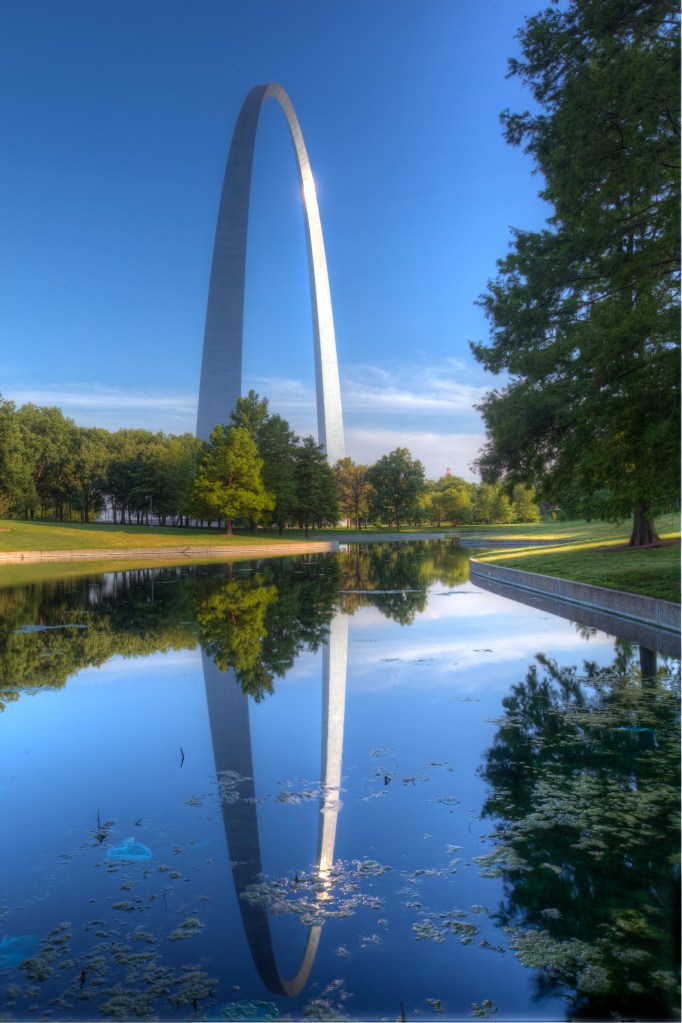
Eero Saarinen’s masterpiece of Mid-Century Modern art and design has graced the St. Louis riverfront since its completion on October 28, 1965, but it is the result of an urban renewal vision for a city seeking to revitalize its historic riverfront during the Great Depression of the 1930’s.
In 1933, the idea of reviving the riverfront captured the attention of Luther Ely Smith, a prominent lawyer in the city. Smith sought the aid of Mayor Bernard Dickmann, and together they approached civic leaders. In April 1934 the Jefferson National Expansion Memorial Association was chartered for the purpose of creating a memorial honoring Thomas Jefferson and the pioneers of the 19th century.
Congress passed a resolution, it was signed by President Franklin D. Roosevelt, and the Commission was created to plan the memorial. St. Louis voters approved the bond issue for the city’s share of design and construction costs, officially creating Jefferson National Expansion Memorial.
The National Park Service was designated as the executive agency to acquire the memorial. Although all the land had been acquired for the site by 1939, the Second World War brought development of the memorial to a halt. In 1940, the Old Courthouse was included in the memorial, and restoration on the building began.
In 1947, an Architectural competition was formally announced. Of the 172 entries, Eero Saarinen’s 630-foot stainless steel arch captured the imagination of the judges, as it was seen as perfectly representing St. Louis as the gateway to the west and as a masterpiece of modernism.
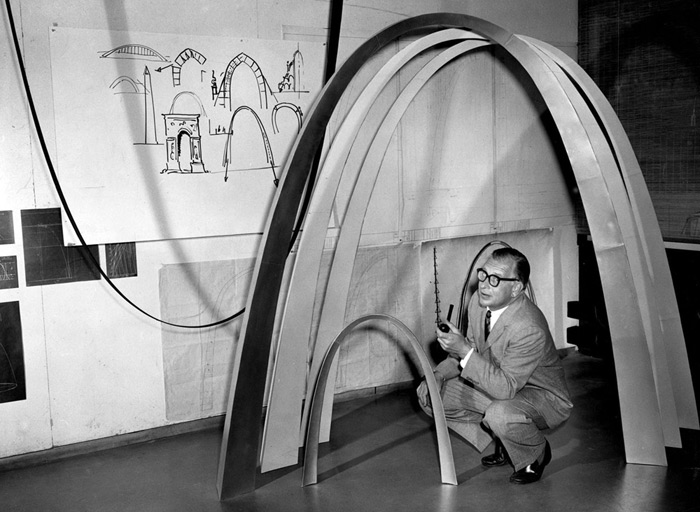
Designing the memorial was one thing, as it appeared deceptively simple in its elegant form, but for engineers and architects it would present a great many problems that would have to be solved. In March 1962, MacDonald Construction was awarded the contract for building the Arch, and in June the first concrete was poured for the foundations. On February 12, 1963, the first stainless steel piece of the Arch was put in place. The section, an equilateral triangle 12 feet high and 54 feet on a side, weighed 101,500 pounds.
The Arch existed on paper and was possible in theory, but nothing like it had been attempted before. The Arch is an inverted catenary curve with a unique structural system. The steel panels are structural load bearing elements and part of an orthotropic design. The Arch’s inner and outer walls, with concrete pressed between them up to 300 feet, acts as a skeleton and carries the weight-bearing load.

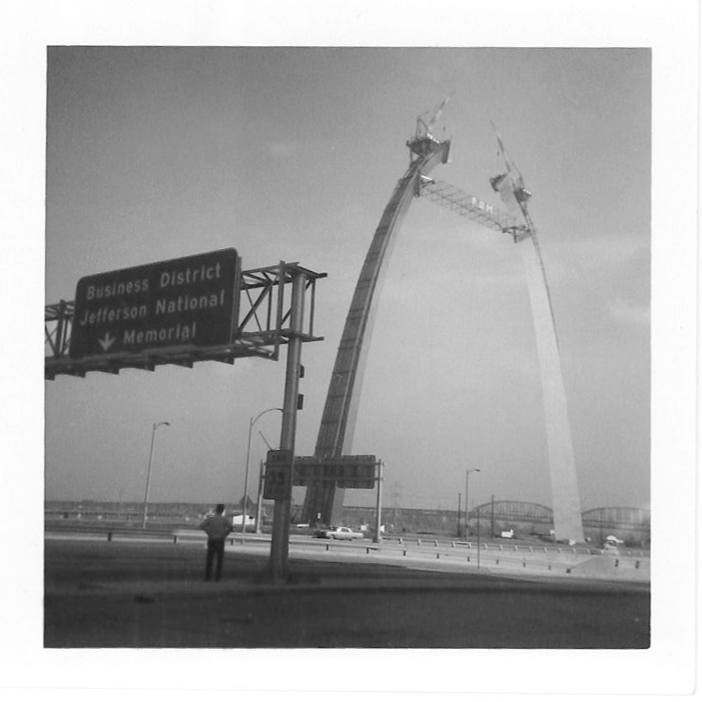
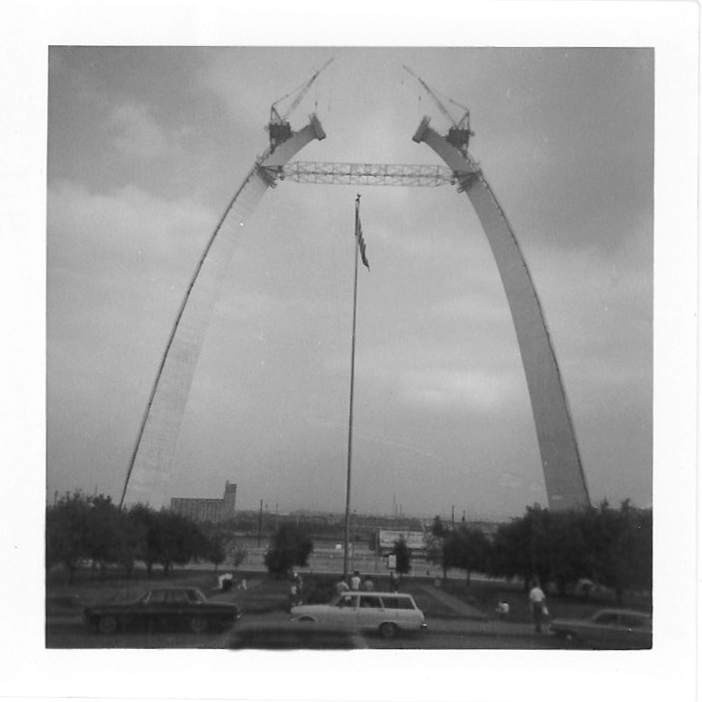
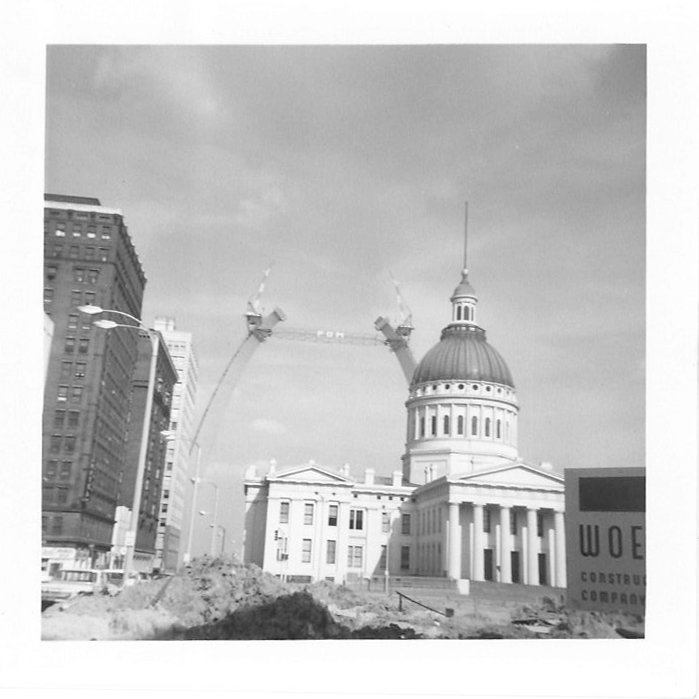

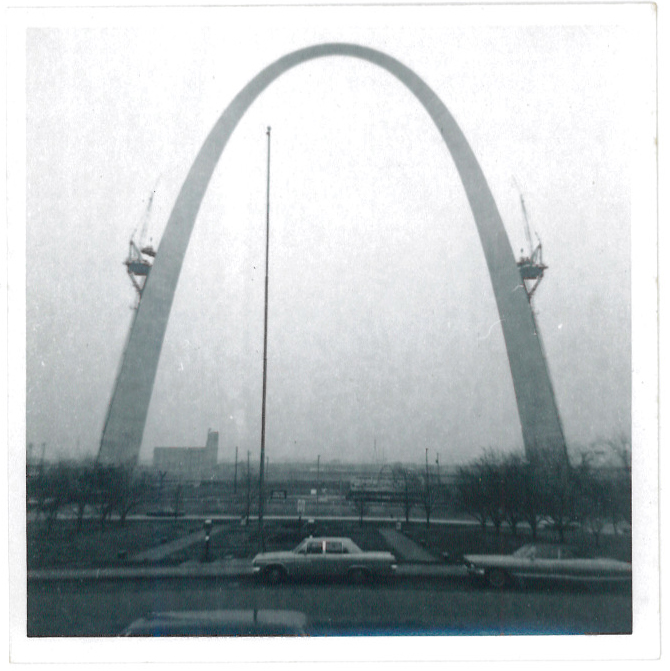
Nearly 26,000 tons of concrete was poured into the footings and 252 alloyed steel tensioning bars in each leg extend 34 feet below the top of the foundations and anchors the Arch to its base. The basic building unit of the Arch is a double-walled triangular section, outside walls being ¼-inch stainless steel (304 with no. 3 finish) and the inside walls are 3/8-inch carbon steel. The first six sections of each leg were put in place by conventional cranes to the height of 72 feet. Unique creeper derricks were used after 72-feet and these were specially designed for the project, the 80-ton assemblies were mounted to the Arch by track and held a 130-foot crane.
The conveyance system designed for the Arch was yet another innovative solution to a difficult challenge. Because of the Arch’s curves, a standard elevator system would not be possible. Richard Bowser designed the solution in a mere two weeks! The Arch tram system uses an ingenious barrel capsule that holds 5 sitting passengers and rotates as the capsule moves up and down the inside of the legs. The trophy for the Engineering Contest is proudly named for Richard Bowser.
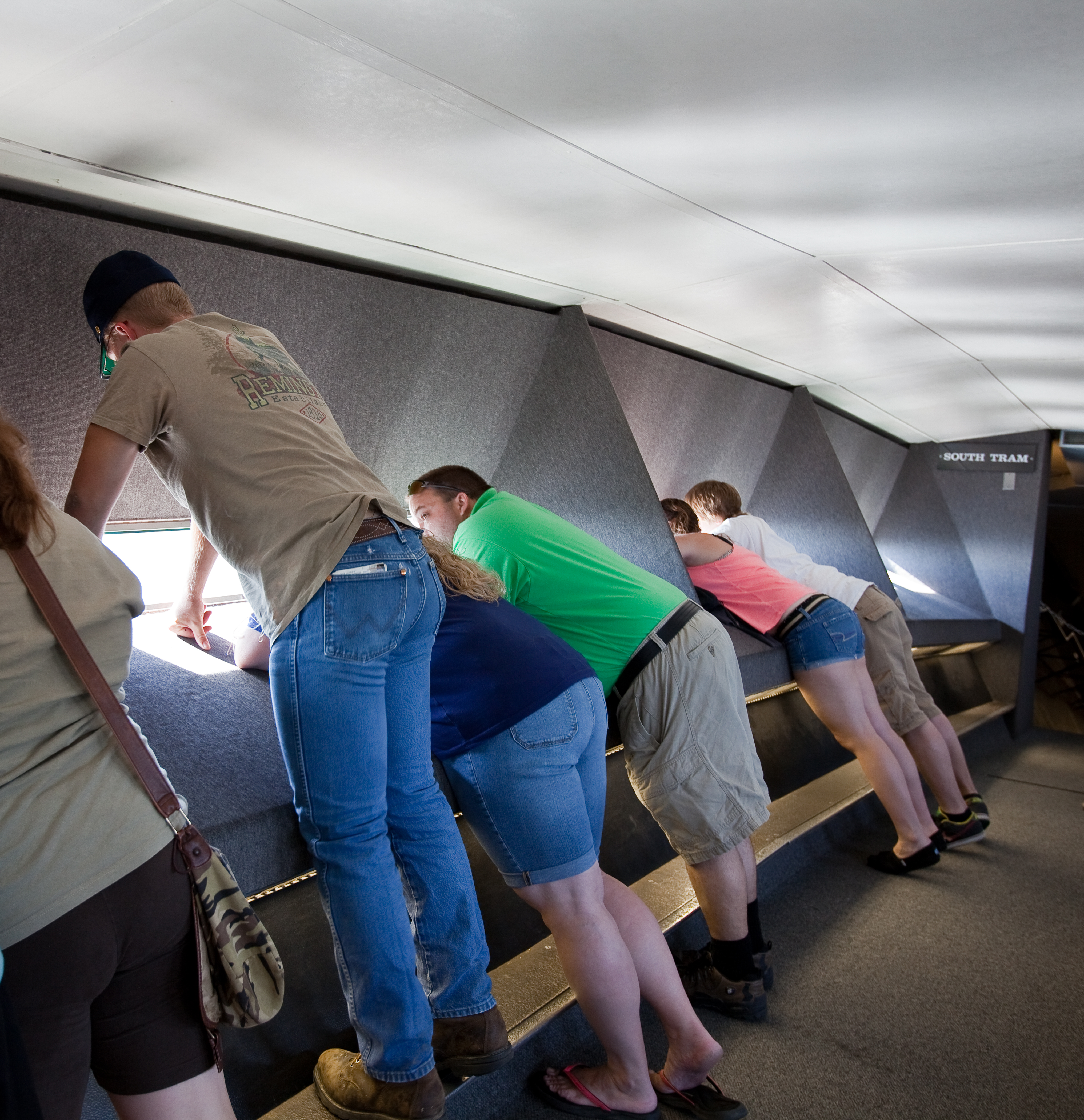
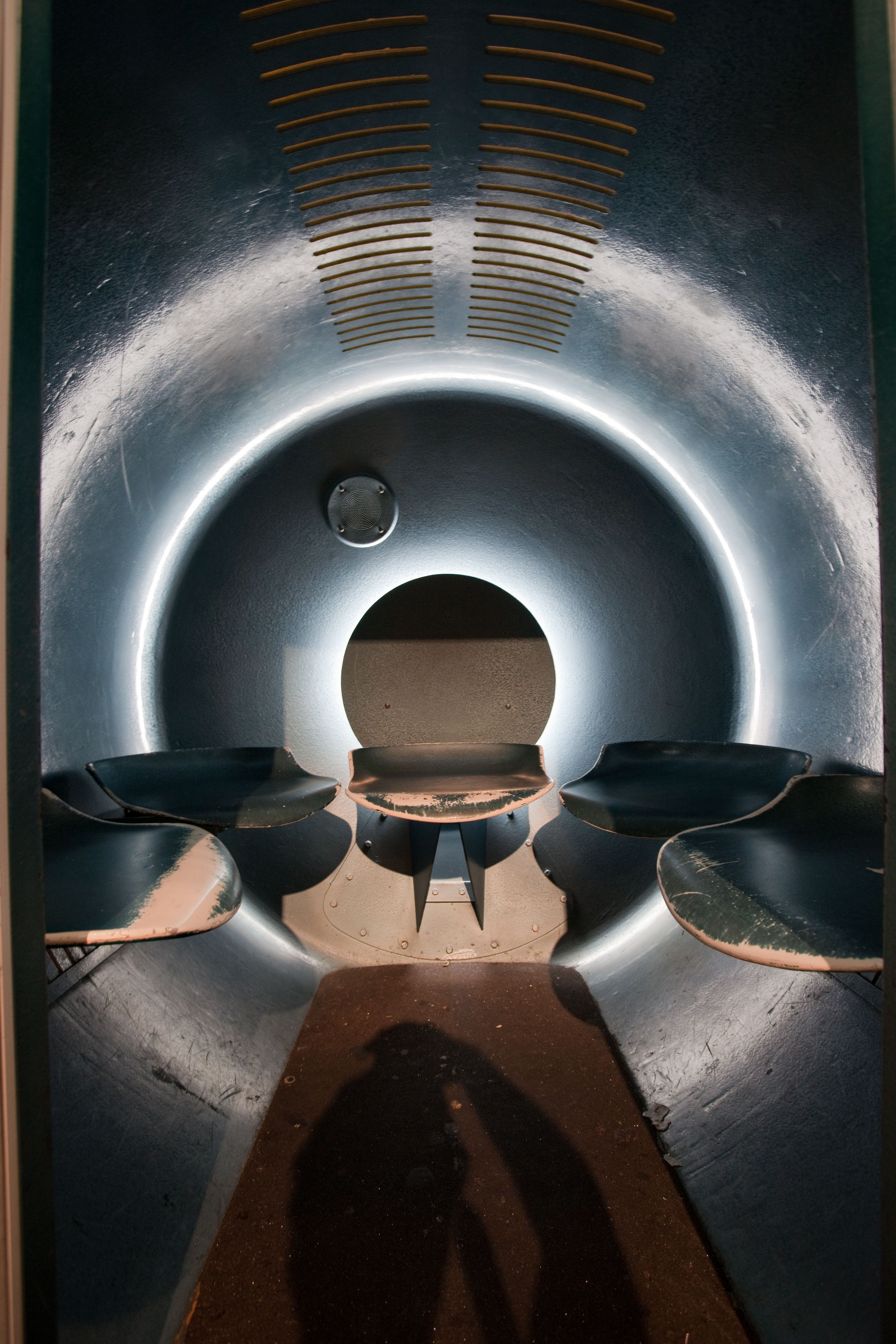
The Arch was completed on October 28, 1965. The original visitor center was completed in 1966. The tram capsule system was completed in 1967 in the north leg, and in 1968 the south leg tram was also operational. The original museum was completed in 1976. In 2018, a 380-million-dollar renovation was completed updating the park for future generations, and the park’s name was officially changed to Gateway Arch National Park.
Gateway Arch National Park and the McKelvey Engineering School at Washington University wishes to pay homage to the engineers, architects, and builders whose intelligence and vision created an engineering masterpiece on the Mississippi River that, as Eero Saarinen proclaimed, “will last for a thousand years.”
 Gateway Arch National Park Engineering Contest